

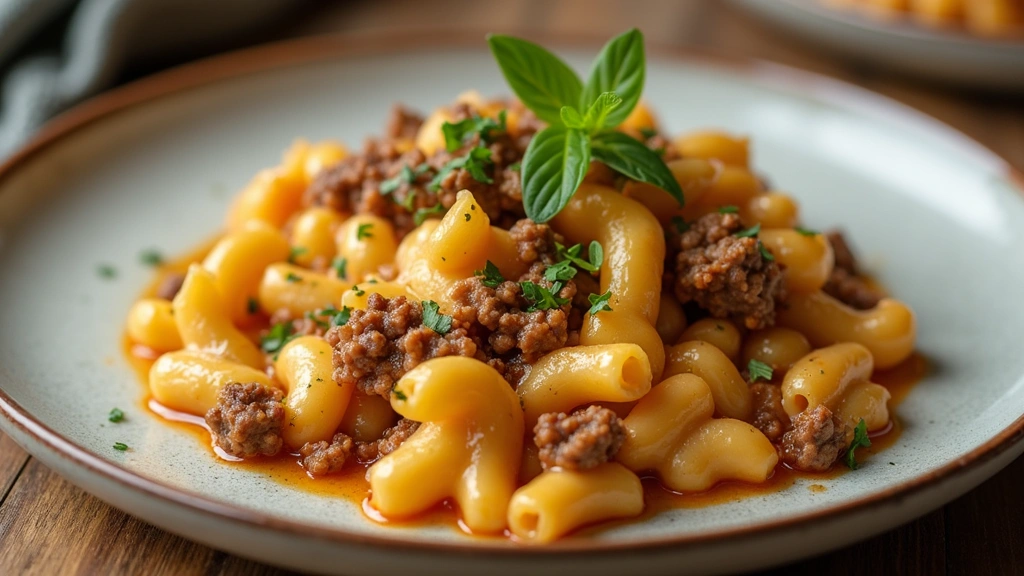
Ground Beef Mac and Cheese is a dish that perfectly marries the rich, savory flavors of beef with the creamy comfort of traditional mac and cheese.
This hearty and satisfying dinner option is ideal for cozy family gatherings or a simple weeknight meal that doesn’t skimp on flavor.
The melty cheese sauce, combined with tender ground beef and perfectly cooked pasta, creates a symphony of taste that warms the soul.
During the colder months, this dish becomes a staple in many households, offering a sense of warmth and nostalgia in every bite.
Whether you’re a mac and cheese aficionado or a newcomer, this recipe promises to deliver a delightful experience.
Share this dish with loved ones and watch as it becomes a new family favorite.
The History and Cultural Significance
• Ground Beef Mac traces its origins to America in the early 20th century, where it was originally created by home cooks seeking a satisfying meal with accessible ingredients.
• The dish evolved over decades as canned cheese and boxed pasta became available, eventually becoming the beloved version we know today.
• In American culture, this dish traditionally appears at gatherings and potlucks, symbolizing comfort and community.
• While many variations exist across different regions, the authentic version maintains a creamy cheese sauce with a hearty beef base that sets it apart from imitations.
Recipe Overview
Nutritional Information (per serving)
Essential Equipment Guide
Large Skillet: A large skillet is crucial for browning the ground beef evenly and ensuring the flavors meld together properly. Alternatives include a Dutch oven or a non-stick pan, but ensure they have a wide surface area for even cooking.
Medium Saucepan: This is essential for preparing the cheese sauce. A heavy-bottomed saucepan is preferred to prevent the sauce from burning. A stainless steel pan can work as an alternative.
Oven-Safe Baking Dish: This dish is used to bake the mac and cheese to achieve a golden crust. Look for a dish that allows for even heat distribution, such as ceramic or glass. A cast-iron skillet can also work well.
Ingredients
For the Base
|
|
| Amount | Ingredient | Notes |
|---|---|---|
| 1 pound | ground beef | lean, adds hearty flavor |
| 8 ounces | elbow macaroni | cooked according to package instructions |
For the Sauce
| Amount | Ingredient | Notes |
|---|---|---|
| 2 tablespoons | butter | adds richness |
| 2 tablespoons | all-purpose flour | thickens the sauce |
| 2 cups | milk | creamy texture |
| 2 cups | cheddar cheese | shredded, adds sharpness |
Seasonings
| Amount | Ingredient | Notes |
|---|---|---|
| 1 teaspoon | salt | enhances flavor |
| 1/2 teaspoon | black pepper | adds depth |
| 1/2 teaspoon | paprika | adds warmth |
Preparation Methods
Browning the Beef: Browning the beef involves cooking it over medium-high heat until it turns a rich brown color. This process enhances the flavor by caramelizing the natural sugars in the meat. Stir occasionally to ensure even browning and prevent burning.
Making a Roux: A roux is made by cooking equal parts flour and butter until it forms a smooth paste. This technique is critical for thickening the cheese sauce. Cook the roux until it turns a light golden color for a subtle nutty flavor.
Melting Cheese: Melting cheese into the sauce requires low, steady heat to prevent it from curdling. Stir constantly and add the cheese gradually, ensuring it melts smoothly for a velvety texture.
Step-by-Step Cooking Instructions
Step 2: Brown the Beef
Heat the large skillet over medium-high heat and add the ground beef.
Cook, breaking it up with a spoon, until fully browned and no pink remains.
Drain excess fat if necessary to prevent a greasy dish.
This step creates a flavorful base for the dish.
Detailed description for the image showing ground beef being browned in a skillet.
Critical Timing and Temperature Guide
Browning the Beef: Cook the beef for 5-7 minutes over medium-high heat until evenly browned. Avoid overcrowding the pan to ensure even cooking and flavor development.
Cheese Sauce Preparation: Maintain a low heat to avoid curdling the cheese. The sauce should be simmered for no more than 10 minutes for optimal thickness and flavor.
Baking the Dish: Bake at 350°F (175°C) for 20 minutes. The top should be golden and bubbly, indicating it's ready. Avoid overbaking, which can dry out the dish.
Pro Tips for Ground Beef Mac
• Ingredient Selection: Choose high-quality cheddar cheese for a rich, sharp flavor that elevates the entire dish.
• Preparation Secret: Toasting the flour slightly before adding milk helps enhance the flavor of the roux.
• Temperature Management: Ensure the cheese is at room temperature before adding it to the sauce to prevent clumping.
• Texture Enhancement: Use freshly cooked pasta as it absorbs the sauce better, creating a more cohesive dish.
• Flavor Layering: Incorporate a touch of mustard powder in the cheese sauce for added depth and complexity.
• Make-Ahead Strategies: Prepare the beef and cheese sauce in advance, storing them separately in airtight containers for up to 2 days before combining and baking.
• Restaurant-Quality Finishing Touches: A sprinkle of breadcrumbs on top before baking adds a delightful crunch.
• Equipment Optimization: Using a convection oven setting can help achieve a perfectly crispy top without overcooking the interior.
Troubleshooting Common Issues
• Cheese Sauce Too Thick: This can occur if the roux is too thick or cooked too long. Gradually whisk in additional milk until the desired consistency is reached.
• Beef Overcooked: Recognize overcooked beef by its dry texture. Prevent this by cooking over medium-high heat and removing it promptly once browned.
• Grainy Sauce: Caused by high heat or cheese added too quickly. Lower the heat and add cheese gradually while stirring constantly.
• Pasta Overcooked: Overcooked pasta becomes mushy. Cook the pasta al dente, as it will continue to cook in the oven.
• Flavors Unbalanced: Too much salt or spice can overwhelm the dish. Taste and adjust seasonings incrementally during preparation.
Variations and Regional Differences
• Southern Style: This version often includes bacon or sausage in addition to beef, with a dash of hot sauce for a spicy kick.
• Italian-Inspired: Swap out cheddar for mozzarella and parmesan, and add Italian herbs like oregano and basil for a Mediterranean twist.
• Tex-Mex Variation: Incorporate jalapeños, taco seasoning, and pepper jack cheese for a southwestern flair.
• Vegetarian Option: Replace the beef with a mixture of mushrooms and lentils for a hearty vegetarian alternative.
Food Science Behind the Recipe
• Malliard Reaction: The browning of the beef involves this reaction, which develops deep, savory flavors.
• Emulsification: The cheese sauce relies on emulsification to create a smooth, cohesive texture. Understanding this helps prevent separation.
• Starch Gelatinization: Involves the pasta absorbing liquid and swelling, contributing to the overall texture and cohesion of the dish.
Frequently Asked Questions
What's the most common mistake people make when preparing Ground Beef Mac and Cheese? Overcooking is a frequent issue, particularly with pasta and cheese sauce. Monitoring cooking times and temperatures closely can prevent this.
Can I use a different type of cheese? Yes, you can experiment with other cheeses like gouda or Monterey Jack, but ensure they melt well.
How can I make this dish gluten-free? Substitute gluten-free pasta and use a gluten-free flour blend for the roux.
Is it possible to make this recipe ahead of time? Absolutely, you can prepare components in advance and assemble them just before baking.
How do I store leftovers? Store in an airtight container in the refrigerator for up to 3 days. Reheat gently in the oven or microwave.
What sides pair well with this dish? A fresh green salad or steamed vegetables complement the richness of the mac and cheese.
Can I freeze Ground Beef Mac and Cheese? Yes, freeze in portions before baking for up to 2 months. Thaw overnight in the refrigerator before baking.
Serving and Presentation Guide
• Traditional Presentation: Serve directly from the baking dish with a sprinkle of fresh parsley for color.
• Individual Portions: Use ramekins for single servings, perfect for a dinner party.
• Family Style: Present in a large, deep dish to keep the dish warm and inviting for family gatherings.
• Gourmet Touch: Add a drizzle of truffle oil or a dusting of smoked paprika for a sophisticated finish.
Conclusion
Ground Beef Mac and Cheese is more than just a meal; it's a comforting experience to share with family and friends.
With its rich flavors and satisfying texture, this dish is sure to become a staple in your culinary repertoire.
Give this recipe a try and enjoy the warmth and joy it brings to your table.